ampm
- 4.6
- Rating
- 1.00M
- Installs
- Free
- Price

 Analysis by App-foxy
I approached ampm as more than a coupon app. It is a food and drink companion from ampm, built around exclusive deals, savings, and prize opportunities. After spending time with it, I found that its real value depends less on how often you visit an ampm location and more on whether you are willing to check the app before buying. That small habit can make the difference between a useful everyday tool and an app that simply occupies space on your phone.
The app is free, rated for Everyone 10+, and available for Android users running version 6.0 or later. It has been around since October 1, 2012, and its current version is 3.16.0-1236. With an average rating of 4.5 from roughly nineteen thousand ratings and more than a million installs, it is clearly not a niche experiment. Still, popularity does not automatically make it comfortable for every user, so I paid particular attention to how readable, navigable, and practical it feels in real situations.
How clearly the app presents deals and everyday choices
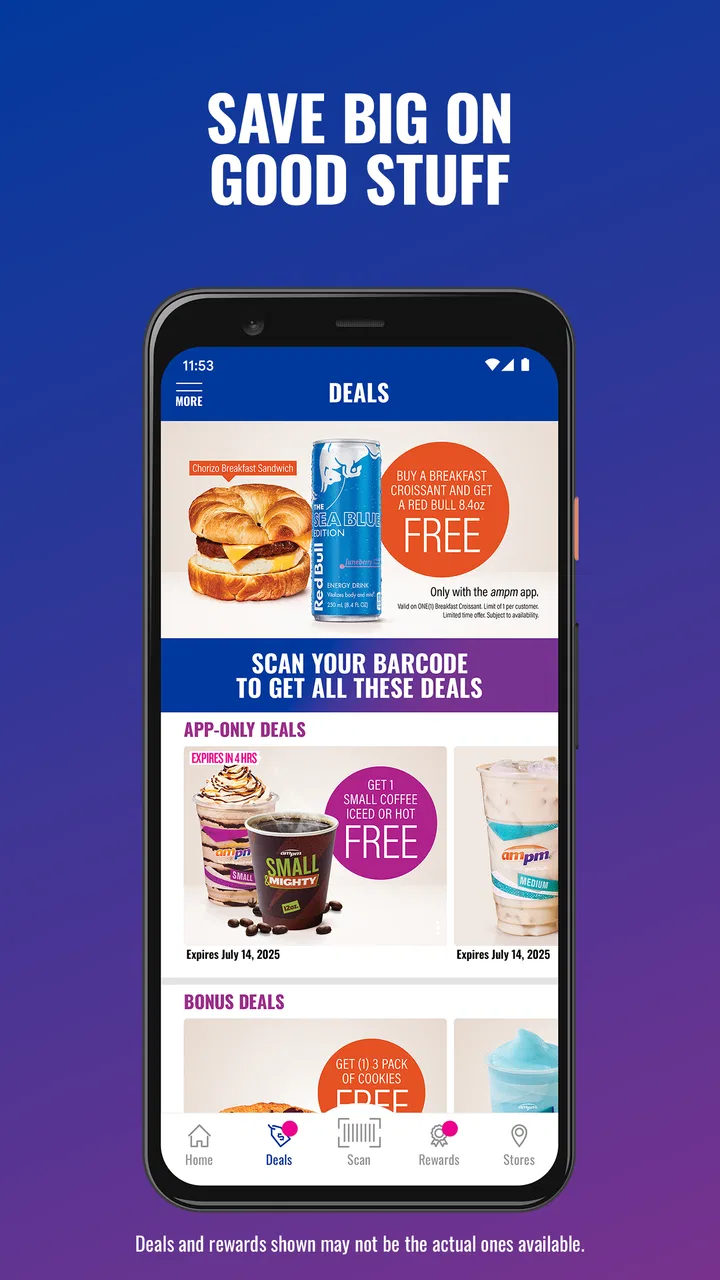
The first thing I noticed is that the purpose is easy to understand. This is not an all-purpose restaurant directory or a complicated loyalty platform that asks you to learn a new system before it becomes useful. Its focus is ampm: open the app, look for available value, and decide whether something applies to the purchase you are about to make.
You May Also Like

 Blood Strike: 2.5 Anniversary
Blood Strike’s Loadouts Turn Every Drop Into a Tactical Gamble
A close look at Blood Strike’s custom loadouts: how fast access to signature weapons reshapes its battle royale rhythm, rewards preparation, and narrows the gap between fights.

 Pandora - Music & Podcasts
Pandora’s Music Is Easy to Start, but Harder to Recover
Pandora’s strength is its low-effort path from a seed to a station. Its weak spot is how much confidence it asks you to place in connection, setup, and quiet recovery.

 8 Ball Pool
 Is Built on Rivalries, Rematches, and Routine
A close look at the rivalries, rematches, shared routines, and unanswered safety questions that turn a quick pool match into a persistent mobile community.

 Samsung Music
’s Quiet Strength Is Playing What You Already Own
Its reach comes less from spectacle than from dependable access to a personal library. That simplicity is both the app’s strongest retention engine and its ceiling.

 AccuWeather: Weather Radar
AccuWeather Review: A Quick, Clear Forecast for Everyday Decisions
For everyday plans, the best forecast is the one you can understand quickly. AccuWeather makes rain timing, radar, and local conditions easy to act on, with a few trade-offs.

 Hill Climb Racing
Why Hill Climb Racing Still Turns Crashes Into One More Run
A tiny car, a bumpy hill and one more upgrade: Hill Climb Racing keeps resurfacing because its simple chaos makes every near-miss feel personal.
More From Our News Desk



That narrow focus helps readability because there is less conceptual clutter than in a broad food-discovery service. Someone who only wants to see ampm savings does not have to sort through unrelated restaurants, recipes, delivery options, or user-generated reviews. In my experience, a focused app is often easier to explain to a family member or friend who is not comfortable with technology.
At the same time, deal-based apps can create their own form of confusion. A promotion may look attractive at a glance, but the useful question is always what action is required. I recommend opening the offer before reaching the counter, reading the wording carefully, and checking whether the saving is connected to a particular item, purchase, or redemption step. That workflow is more reliable than assuming every visible deal works automatically.
The app’s strongest accessibility quality is its direct purpose. You are not required to compare dozens of businesses or build a detailed food profile. For a person who finds large menus and endless categories tiring, that simplicity may reduce mental effort. The trade-off is that the experience is only as clear as the individual offer presentation. If a user needs very explicit instructions, small differences in wording or button placement can matter more than they would in a normal browsing app.
Navigation that suits quick visits
I see this as an app designed for short sessions rather than long browsing. A realistic use case is stopping outside an ampm location, opening the app, checking whether a relevant deal is available, and then completing the purchase. That means navigation should be judged by how quickly it supports one decision, not by how many sections it contains.
My practical advice is to avoid waiting until you are already at the register. If you have a few spare minutes earlier in the day, look through the available offers and decide what you might use. This is especially helpful for people who need more time to read, people who are easily distracted in busy shops, or anyone who does not want to handle a phone while a line is moving.
There is also a useful distinction between discovering a deal and redeeming it. Discovery can happen calmly at home, while redemption happens in a noisy, hurried environment. Treating those as separate steps makes the app easier to manage. I would save the relevant information mentally or keep the offer ready before entering the store, rather than trying to understand every detail at the counter.
For users with limited digital confidence, the app is likely easier when used with a simple routine: open it, look for the most relevant current offer, read the conditions, and only then decide whether to use it. That routine avoids unnecessary exploration. It also reduces the chance of tapping around while standing in a crowded checkout area.
Readable content matters more than visual excitement
Promotional apps naturally want deals to stand out, but a bright or busy presentation is not automatically accessible. The important information is the offer itself, the requirement attached to it, and the action needed to use it. I found that users should concentrate on those details instead of judging a promotion by its headline alone.
If you have difficulty reading dense text, increase your phone’s display size before reviewing offers and use the device’s built-in screen reader or magnification tools if those are part of your normal setup. I would not assume that every promotional element will be equally comfortable with every assistive setting, so it is sensible to test the app in a calm environment first.
This is also where the app’s focused design can help older users. They may not need a large restaurant marketplace; they may simply want to know whether an ampm purchase can cost less. A relative helping them can demonstrate the checking process once and then leave them with a repeatable habit. The app becomes easier when it is treated as a small shopping aid rather than a service that must be mastered in full.
Motor, sensory, and cognitive considerations in real use
Using a phone at a convenience store is not the same as using one at a desk. You may be standing, carrying a drink, wearing gloves, dealing with glare, or trying to hear a cashier. Those conditions affect accessibility even when the app itself is straightforward.
For someone with limited fine-motor control, the most comfortable approach is to prepare before arriving. Open the app while seated, identify the offer, and avoid repeated tapping at the register. A person who struggles with precise touch gestures may also benefit from using the phone’s standard accessibility controls, such as larger touch targets or voice interaction where supported by the device. These are phone-level aids rather than features I would attribute specifically to ampm.
People with visual sensitivities may prefer to use the app in a quieter setting and lower the screen brightness to a comfortable level. A busy promotional design can be harder to process when the screen is reflecting sunlight or when the user is already dealing with sensory overload. I found that the best experience comes from narrowing attention to one offer instead of scrolling through everything available.
For users with hearing loss, the app has an obvious practical advantage over relying on spoken explanations: the offer can be reviewed on the screen before the conversation at the counter. That does not remove every difficulty, because the final transaction may still involve verbal communication. Showing the relevant offer directly can reduce the need to ask someone to repeat details.
For users with cognitive disabilities, predictability is valuable. I would recommend choosing a single goal before opening the app: find a saving for the current purchase, check whether a prize opportunity is relevant, or simply review what is available. Trying to pursue all of those at once can make a small app feel more complicated than it needs to be.
The prize element may be enjoyable for people who like occasional promotional engagement, but it should not become the reason to make purchases that were not already planned. From an accessibility and budgeting perspective, the healthiest use is to treat prizes as an optional extra and savings as the practical reason to return. That distinction keeps the app useful for people with different financial circumstances.
A realistic morning stop
Imagine a commuter who stops at ampm before work. They have limited time, one hand occupied with a bag, and poor concentration because the shop is busy. The smoothest workflow is to check the app before leaving home, read the offer in a quiet room, and arrive with a clear decision. At the store, they only need to present or follow the prepared offer rather than search through the app from the beginning.
Now consider a different user: someone who is sensitive to noise and bright light and prefers not to make quick decisions in public. For that person, the app is most useful as a planning tool. They can review possible savings in advance and decide whether the visit is worthwhile. If the deal requires too many steps at the counter, the user can skip it without having committed to an uncomfortable interaction.
A parent or carer can use a similar approach. Instead of handing over the phone in a crowded store, they can review the offer together earlier and explain what will happen. This supports independence without forcing the user to navigate under pressure. It also makes it easier to notice conditions that might otherwise be missed.
When the app is better than ordinary alternatives
The most obvious alternative is simply visiting ampm without checking anything. That is faster if you never use promotions, but it also means you may miss a saving or prize opportunity that would have influenced your choice. The app earns its place when the user is already likely to shop at ampm and is willing to spend a moment checking first.
Another alternative is a general coupon or food-discovery app. Those services can be better for comparing multiple chains, finding restaurants in an unfamiliar area, or planning a broader meal. They may also suit someone who wants reviews, maps, delivery choices, or a wide range of cuisines. ampm is more appropriate when the decision is specifically about an ampm purchase and the user values a focused experience.
There is a trade-off in that focus. If you rarely visit ampm, a general savings app may provide more day-to-day value because it covers more places. If you dislike promotional notifications, prize mechanics, or checking offers before shopping, the app may feel like unnecessary work. I would not recommend installing it merely because it is free; I would install it when ampm is part of your normal routine.
Situational access, remaining friction, and who should skip it
The app’s usefulness changes sharply with connectivity, time pressure, and store conditions. A promotion that is easy to inspect at home may be harder to use when the phone has weak reception, the screen is difficult to see, or the checkout line is moving quickly. I advise opening the app before the trip rather than relying on a last-second search.
Battery life is another ordinary but important concern. Deal apps are not usually the main reason a phone runs low, but a person who depends on a phone for transport, communication, or medical needs should not make a store promotion their only plan. If the phone is nearly empty, the practical choice may be to complete the purchase without the offer rather than create stress over a small saving.
There can also be a social barrier. Some users feel uncomfortable presenting a digital promotion, especially if they are unsure whether they have followed the correct step. Preparing in advance helps, but it does not eliminate the possibility of an awkward moment. A person who prefers completely predictable pricing may be happier with a straightforward purchase and no promotional interaction.
Users who need highly controlled visual presentation should test the app with their preferred device settings before depending on it. Larger text, magnification, contrast adjustments, and screen readers can improve phone use generally, but promotional interfaces do not always respond equally well to every setting. I would consider this a reason to try the app cautiously, not an automatic reason to reject it.
People who have difficulty with spontaneous decisions should also be selective. The combination of deals and prizes can encourage browsing beyond the original purpose. Set a simple rule: only use an offer for something you already intended to buy, and ignore the rest. That turns the app into a cost-saving tool instead of a source of pressure.
On the other hand, the app can be a good fit for users who appreciate a single-brand experience. Someone who visits ampm regularly, wants to check savings without comparing a long list of unrelated services, and can prepare before entering the store will probably find the focused approach convenient. The fact that it is free lowers the barrier to testing it, although free installation does not guarantee that every user will find the interaction worthwhile.
What I would do before relying on an offer
I would open the app somewhere quiet and identify the one deal or prize opportunity that actually interests me.
I would read the complete offer wording instead of relying on the most prominent phrase.
I would adjust text size, brightness, or device accessibility settings before arriving if those changes help me read comfortably.
I would keep the phone charged and avoid making the checkout interaction my first attempt at using the app.
I would treat prizes as optional and make the purchase decision independently of them.
That process is not complicated, but it addresses the main weaknesses I encountered: rushed reading, uncertain redemption, and using a phone in an inconvenient environment. It also makes the app more workable for people with different abilities without pretending that one interface can suit everyone equally.
My inclusive verdict on ampm
I came away viewing ampm as a practical, focused food and drink app rather than a complete shopping assistant. Its best quality is that it connects one familiar store brand with a simple reason to open the app: check whether there is a useful saving or an opportunity to win a prize. The developer, ampm, has kept the concept understandable enough for quick visits, and the app’s long availability and broad install base suggest that it has found a stable audience.
For accessibility, I would describe it as potentially approachable when used deliberately. The narrow purpose can reduce cognitive load, and screen-based offer details may help people who prefer not to rely on spoken explanations. Preparing offers in advance also supports users with motor, sensory, or attention-related needs. These strengths come from the way the app can fit into a routine, not from any special certification or guarantee that it will work identically for every user.
The limitations are equally clear. Promotional content still needs careful reading, public redemption can be stressful, and the experience may be less comfortable in bright, noisy, rushed conditions. People who rarely visit ampm, want broad restaurant comparison, or prefer fixed prices without promotional steps will probably get more from an ordinary shopping routine or a wider coupon service.
I would recommend trying it if you already shop at ampm and are comfortable checking your phone before a purchase. My strongest tip is to use it as a planning aid: review the offer at home, choose one clear purpose, and arrive ready. Used that way, the app can make a familiar stop more economical without demanding much attention.
For me, that is the right standard. It does not need to replace every food app, and it should not be treated as a reason to buy more than planned. It simply needs to make ampm visits more informed. If that matches your routine, the free download is easy to justify; if not, its focused design may feel too narrow to earn a permanent place on your phone.
FAQs for ampm
01What platforms is the Ampm app available on?
The Ampm app is available for both Android and iOS platforms. You can download it from the Google Play Store for Android devices and the Apple App Store for iOS devices. Ensure your device meets the necessary system requirements for optimal performance.
02Is the Ampm app free to use?
Yes, the Ampm app is free to download and use. However, while the basic features are available at no cost, there may be in-app purchases or subscription options for advanced features or premium content. Check the app’s listing for detailed pricing information.
03What features does the Ampm app offer?
The Ampm app offers a variety of features designed to enhance user convenience and experience. These include personalized notifications, location-based services, and user-friendly interfaces. Additionally, it may include special promotions or loyalty rewards exclusively for app users. Always refer to the app description for the latest features.
04How secure is my data with the Ampm app?
Data security is a top priority for the Ampm app. It employs industry-standard encryption and security measures to protect your personal information. However, users are encouraged to read the app’s privacy policy and terms of service to understand how their data is used and stored.
05Can I use the Ampm app without an internet connection?
Some features of the Ampm app may require an internet connection to function properly, such as real-time updates and location services. However, certain offline functionalities might be available, depending on the app's design. For the best experience, ensure a stable internet connection when using the app.
Pros
- User-friendly interface for easy navigation.
- Wide variety of products available.
- Seamless and quick checkout process.
- Loyalty rewards offer great benefits.
- Regular updates enhance app functionality.
Cons
- Limited payment options available.
- Occasional crashes on older devices.
- Some items have inconsistent pricing.
- Delivery tracking can be inaccurate.
- Customer support response time varies.

ampm
Gallery